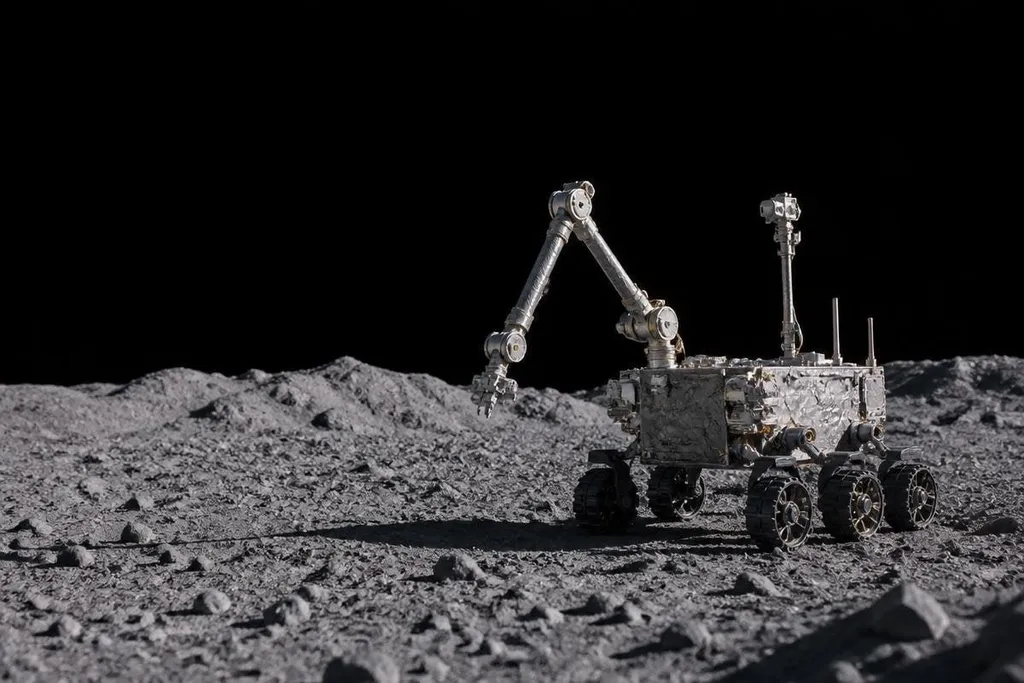
A space robot may travel for months before reaching its work site. Once it arrives, a person on Earth may not be able to guide every movement, so the machine must sense danger, choose actions, and recover from errors.
This article looks at the work that will shape future space robots, along with the limits that still need answers.
Quick read
- Robots will need to inspect, repair, move, and prepare sites with limited human control.
- Autonomy will matter most when communication delays interrupt live commands.
- The open test is recovery: can a robot handle dust, damage, or an object in the wrong place?
Work will come before construction
The first useful tasks may be small and repeatable. The robot could inspect a landing area, check equipment, move supplies, or collect material for later study. Each task reduces the number of steps a person must perform by hand.
That order matters. A robot that can inspect a machine before a crew arrives gives mission planners better information. Moving tools or parts can also reduce the time people spend working outside a safe habitat.
Site preparation will ask more of the machine. The robot may need to clear loose material, mark safe routes, or place equipment in a planned location. Those jobs depend on accurate movement across ground the robot has never seen before.
Autonomy has to include recovery
Autonomy means the robot can act from sensor data and a set of rules instead of waiting for a command for every movement.
That does not mean the machine understands its surroundings like a person. It means the software can compare what it sees with the task and choose from allowed actions.
A plan can fail for ordinary reasons. A tool may not sit where the robot expects. A wheel may lose traction. A sensor may return a poor reading. The useful machine is the one that notices the error, pauses safely, and asks for help when its options run out.
This is where many future claims will face a hard test. A short demonstration can show that a robot completes one planned action. It cannot prove that the same robot can work through an unknown site for days without close supervision.
A lunar rover may need a repair plan before it leaves Earth, because a fault can put the machine beyond a technician’s reach. Robot24 can tie space-robot claims to a named mission and repair task before the next section asks how crews fix machines far from Earth.
Repairs may decide the value
A space robot that only performs its first task has limited use after a fault. A repair robot needs more: access to damaged parts, tools that fit more than one job, and software that can change the work plan when the hardware behaves differently.
The machine may also need to work with people. A crew could ask it to carry a part, hold a panel, or inspect a hard-to-reach area. That calls for clear control modes and a safe stop when the robot cannot identify the object in front of it.
Power adds another limit. Every movement, sensor reading, radio message, and heating or cooling task uses energy. A robot that spends too much power reaching a work site may have too little left for the repair itself.
The limits are still plain to see
No evidence pack was supplied for this article, so there is no verified mission record, price, test result, or named deployment to use as proof. That leaves the main question open: which designs can move from a controlled demonstration to long work far from Earth?
The answer will depend on tests that show full task sequences, including mistakes and recovery. Short clips can show motion. They do not show maintenance needs, software faults, blocked paths, or the time required to restore a machine after damage.
I'd be cautious about any space robot claim that leaves those details out.
A practical checklist for future missions
Use these checks when judging a new space robot proposal:
- Name the task: What exact job does the robot finish, and what result counts as success?
- Check control needs: How often must a person send commands or approve the next action?
- Ask about recovery: What does the robot do after a blocked route, poor sensor reading, or failed grip?
- Measure the full work cycle: Include travel, setup, tool changes, charging, and fault recovery.
- Find the test conditions: Check if the demonstration used unknown ground, limited communication, and real hardware.
A useful future space robot will be judged by the work it completes after the easy demonstration ends. The next proof should show a full task, a real fault, and a safe recovery without live control at every step.